
One way stablecoins drive prices higher
There's a loop that's not discussed enough.

Everyone says stablecoins are crypto’s biggest success. And honestly, they might be right.
More and more people are using stablecoins. 242 billion dollars are sitting in USDT, USDC, and other stablecoins right now. Just look at this chart:
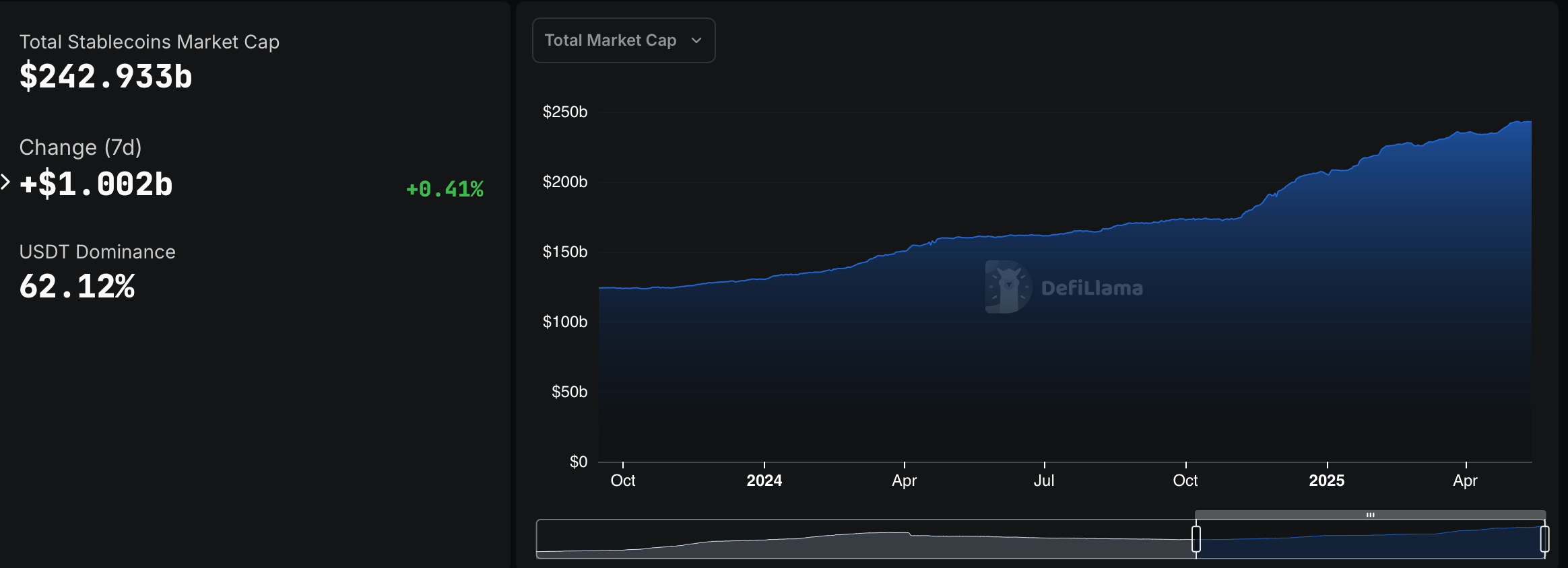
The thinking is simple. Stablecoins are just dollars onchain. They don’t move the price of blockchain native tokens like ETH or SOL.
That sounds reasonable. But maybe that’s not the whole story.
There might be ONE way stablecoins could help prices move.
I’m not saying this happens every time and that it’s the only thing that matters. But it’s something worth thinking about.
Let me break it down.
More Stablecoins = Lower Yields
If stablecoin supply grows fast, yields might go down.
Why? When deposit growth outpaces borrow demand, supply yields fall.
In other words, there are more stablecoins to lend out, but not always enough people who want to borrow them.
This pushes yields lower.
BUT, when borrowing gets cheaper, more people are willing to take on leverage.
That means borrowing stablecoins to buy more crypto.
For example, they might deposit ETH on Aave. Then they borrow USDC. And they use that USDC to buy more ETH. Or the next shitcoin.
When borrow rates are high, this isn’t worth it. But when rates drop to 2% or 3%, it starts to look pretty good.
So people do it. Sometimes a lot of people do it at once.
This creates extra buying. And extra buying can push prices higher.
And there’s one more thing.
When there are tons of stablecoins onchain, it’s easier to trade.
Big trades don’t move the price as much (aka low slippage).
That makes traders more comfortable. They can buy or sell large amounts without hurting themselves.
So even more trading happens. And that brings even more activity onchain.
I’m not saying this happens all the time.
Markets are messy.
Sometimes yields drop because people are scared to take risk. Sometimes leverage dries up no matter how cheap borrowing gets. Sometimes stablecoin growth doesn’t lead to anything exciting at all.
Plus, there are bigger forces at play:
Rates in the real world.
Regulation.
Risk appetite.
Off-chain liquidity.
All of these can flip the story fast.
Cheap borrowing isn’t always bullish. In fact, sometimes it’s a trap.
So, stablecoin growth isn’t some magic button that makes prices go up.
But it can set the stage. It can make borrowing cheaper. It can make trading easier. It can invite more activity.
Something to keep in mind.